Method
Four moves for changing an arrangement without overbuilding it.
Ugayi uses a deliberately small method. The aim is not to redesign a room or impose a complete system. The aim is to notice where an object asks for extra attention, then test whether a tiny correction can remove that demand. The bureau prefers changes that are reversible, visible, and easy to explain in one sentence. When a correction needs a manual, it is probably too large for the problem.
Name the disturbance
Describe the repeated snag, noise, reach, wobble, or missed return without blaming the user.
Trace the motion
Watch the approach, use, pause, and return. A fix that helps only one moment is incomplete.
Test with scrap
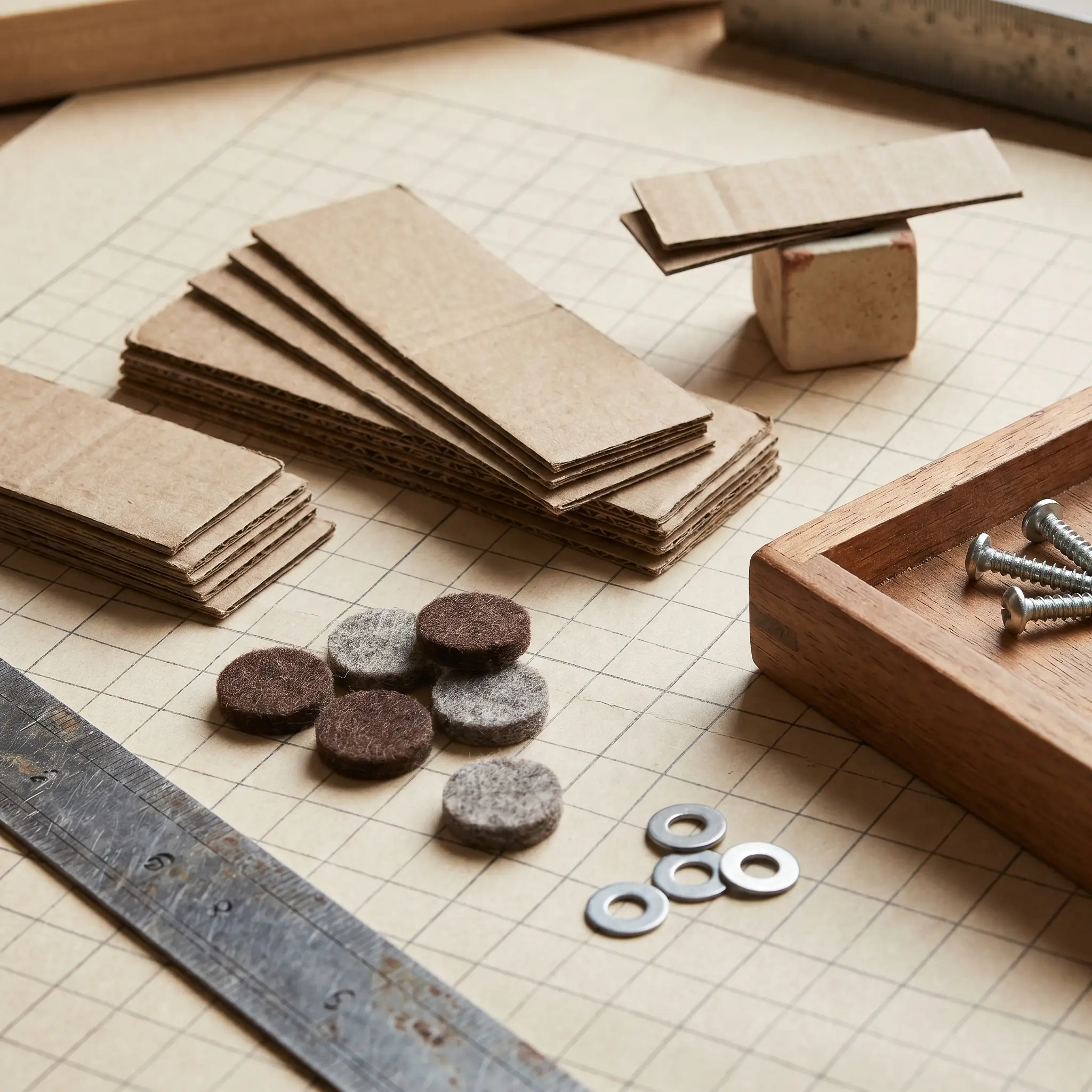
Use folded card, felt, tape, clip, washer, tray, or a temporary mark before changing the object permanently.
Keep the smallest win
If a correction reduces explanation and survives a week of use, keep it visible and simple.
What counts as evidence
A photograph of the object before and after the test is stronger than a memory of annoyance. Ugayi notes the distance moved, the material used, and whether the correction made return easier.
A failed test is useful when it explains why. Too much grip, too little clearance, an awkward reach, or a cue hidden from the usual path can all guide the next smaller trial.
A permanent fix is considered only after the temporary version works during ordinary use. The bureau values changes that survive fatigue, visitors, hurried mornings, and imperfect attention.